
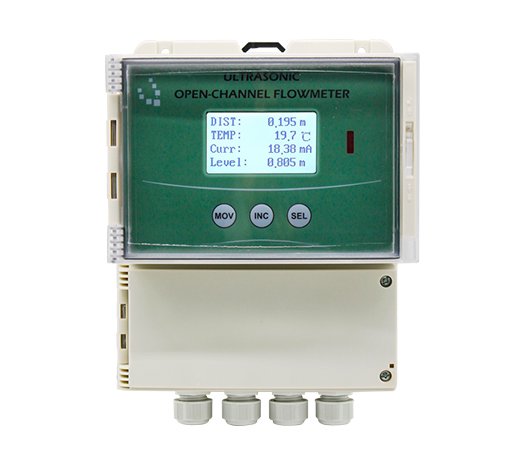
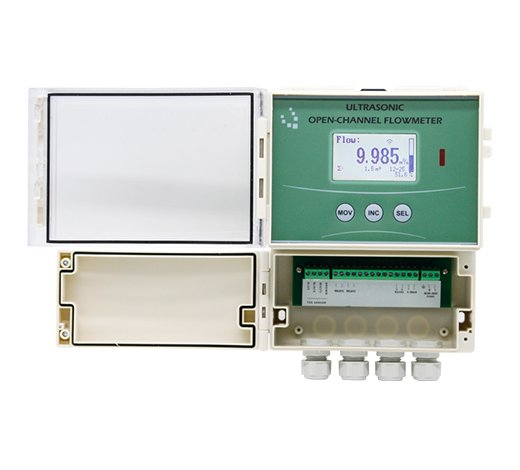
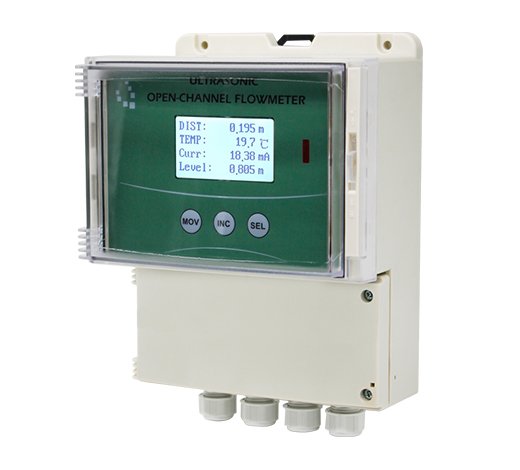
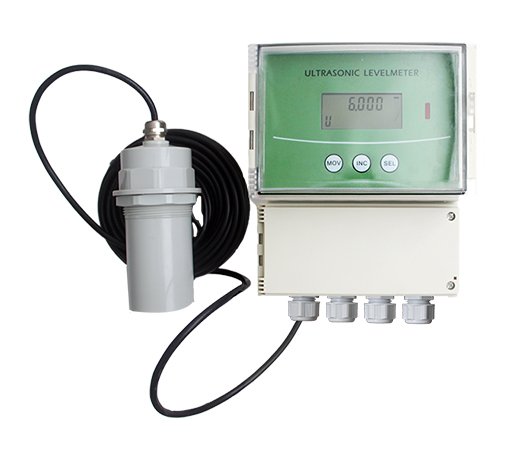
Open channel flow meter is an economical solution for open channel measuring, which measures level, flow rate and total volume of water flowing through weirs and flumes. The meter includes a non-contact ultrasonic level sensor to detect the water level and then calculates the flow rate and volume using the Manning equation and characteristics of the channel.
Open Channel Flow Meter Advantages and Disadvantages
Economical and reliable. The accuracy of change in level is 1 mm.
Suitable for a variety of weirs and flumes, Parshall flumes (ISO), V-Notch weirs, Rectangular weirs(With or Without End Contractions) and custom Formula type weir;
Displays flow rate in L/S , M3/h or M3/min;
Clear display with Graphical LCD(with backlight) ;
The cable length between probe and host up to 1000m;
The probe with leak-proof structure and IP68 protect grade;
Chemically resistant probe materials for maximum application flexibility;
Provided 4-20mA output and RS485 serial communication (MODBUS-RTU) output;
Provided programmable 6 relays at most for alarms;
Three button for programming or remote control for easy configuration and operation(opt.);
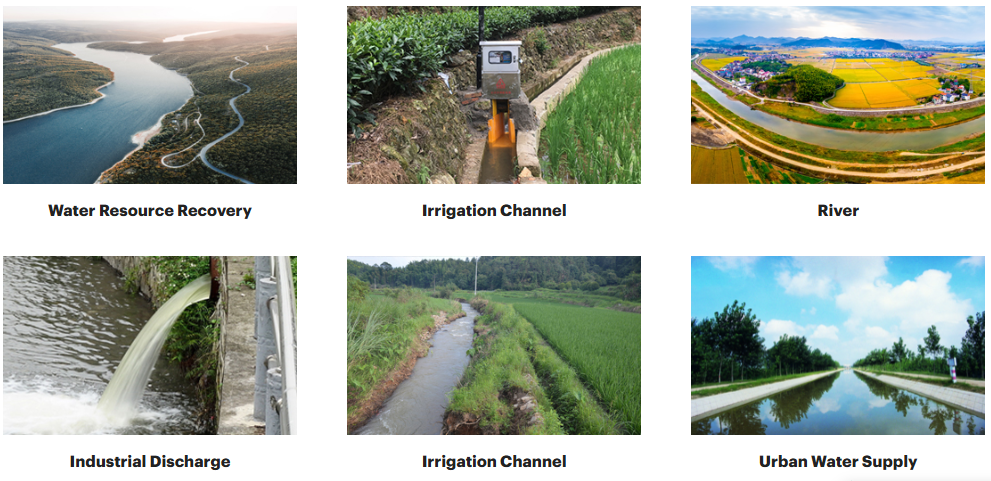
Open channel flow meter is well suited for applications ranging from flow into water treatment plants, storm and sanitary sewer systems, and effluent from water resource recovery, to industrial discharge and irrigation channels.
| Power Supply | DC24V (±5%) 0.2A; AC220V (±20%) 0.1A ;Optional DC12V |
| Display | Backlit LCD |
| Flow Rate Range | 0.0000~99999L/S or m3/h |
| The maximum of Accumulative Flow | 9999999.9 m3/h |
| Accuracy of Change in Level | 1mm or 0.2% of full span (whichever is greater) |
| Resolution | 1mm |
| Analogue Output | 4-20mA, corresponding to instantaneous flow |
| Relays Output | Standard 2 relay outputs(Optional up to 6 relays) |
| Serial Communication | RS485, MODBUS-RTU standard protocol |
| Ambient Temperature | -40℃~70℃ |
| Measure Cycle | 1 second (selectable 2 seconds ) |
| Parameter Setting | 3 induction buttons / remote control |
| Cable gland | PG9 /PG11/ PG13.5 |
| Converter Housing Material | ABS |
| Converter Protection Class | IP67 |
| Sensor Level Range | 0~4.0m ;other level range also available |
| Blind zone | 0.20m |
| Temperature Compensation | Integral in probe |
| Pressure Rating | 0.2MPa |
| Beam Angle | 8° (3db) |
| Cable Length | 10m standard (can be extended to 1000m) |
| Sensor Material | ABS, PVC or PTFE (optional) |
| Sensor Protection Class | IP68 |
| Connection | Screw (G2) or flange (DN65/DN80/etc.) |
Open channel flow meter Hints for probe mounting
1. The probe can be supplied as standard or with a screw nut or with an ordered flange.
2. For applications requiring chemical compatibility the probe is available fully enclosed in PTFE.
3. The use of metallic fittings or flanges is not recommended.
4. For exposed or sunny locations a protective hood is recommended.
5. Make sure that the probe is mounted perpendicular to the monitored surface and ideally, at least 0.25 meters above it, because the probe cannot get response in the blind zone.
6. The probe has a 10 inclusive conical beam angel at 3 db and must be mounted with a clear unobstructed sight of the liquid to be measured. But smooth vertical sidewalls weir tank will not cause false signals.
7. The probe must be mounted upstream of the flume or weir.
8. Do not over-tighten the bolts on flange.
9. The stilling well can be used when there is volatility in the water or needs to improve the accuracy of level measurement. The still well connect with the bottom of the weir or flume, and the probe measures the level in the well.
10. When install to the cold area, should choose the lengthen sensor and make the sensor extend into the container, shun frost and icing.
11. For Parshall flume, the probe should be installed in a position the 2/3 contraction away from the throat.
12. For V-Notch weir and rectangular weir, the probe should be installed on the upstream side, the maximum water depths over the weir and 3~4 times away from the weir plate.
Simple setup for flumes and weirs
Selectable pre-programmed formulas for flumes, weirs and other geometries
Koncept Instrument Co., Ltd. is your One-Stop Flow/level Instruments Procurement Platform!
2026 Copyright © Koncept Instrument Co., Ltd.